Get Free EV Charger Estimates
Will Your Panel Handle the Load Without an Upgrade?
Before scheduling an EV charger installation, the most critical step is evaluating your home’s electrical panel capacity. Most EV chargers require a dedicated 240-volt circuit with 40 to 50 amps of capacity, and your existing panel must have enough available amperage to support this additional load without overloading your home’s electrical system.
In the Bowie area, many older homes built before 2000 have 100-amp or 150-amp panels that are already running near capacity with air conditioning, electric water heaters, and modern appliances. When summer temperatures climb in Prince George’s County, these systems work overtime, and adding an EV charger without proper capacity assessment can lead to tripped breakers, voltage drops, or even fire hazards.
A licensed electrician will perform a load calculation to determine whether your current panel can handle the additional demand or if you need an electrical panel upgrade. This assessment examines your total connected load, the amperage of your main service, and the available breaker spaces. 517 GMJ Electric brings over 10 years of experience performing these calculations throughout the Washington metro area, ensuring your home can safely power your EV without compromising other electrical systems.
The professional load calculation process involves several critical steps. First, the electrician inventories every major appliance and system in your home, recording the nameplate amperage or wattage of your HVAC system, water heater, range, dryer, and any other 240-volt equipment. Next, they calculate the total connected load using NEC formulas that account for demand factors, recognizing that not all appliances run simultaneously at full capacity. They then compare this total against your main service rating and determine how much spare capacity remains.
For a 50-amp EV charger circuit, you typically need at least 60 to 80 amps of available capacity to meet code requirements and maintain safe operation. If your panel falls short, the electrician will recommend upgrading to a 200-amp service, which has become the standard for modern homes with electric vehicles in Anne Arundel and Montgomery counties.
Consider this common scenario from a recent 517 GMJ Electric project in Upper Marlboro: a homeowner with a 150-amp panel, a 3-ton central air conditioner drawing 30 amps, an electric dryer using 24 amps, a 40-gallon electric water heater pulling 18 amps, and an electric range requiring 40 amps discovered their panel was already at 112 amps of connected load before accounting for lighting and receptacle circuits. Adding a 50-amp EV charger would have pushed the total well beyond safe limits. The solution was a 200-amp panel upgrade, which not only accommodated the EV charger but also provided headroom for future additions like a heat pump or home battery system.
This upgrade process involves coordinating with Pepco to ensure the utility’s service drop can supply the increased amperage, replacing the meter base if necessary, and installing a new main panel with modern safety features like arc-fault and ground-fault protection. 517 GMJ Electric handles every phase of this work, from the initial load calculation through final inspection, ensuring your home is ready to charge your EV safely and reliably for years to come in the variable climate of the Washington metro area.
Garage vs. Outdoor: Which Setup Survives Maryland Weather?
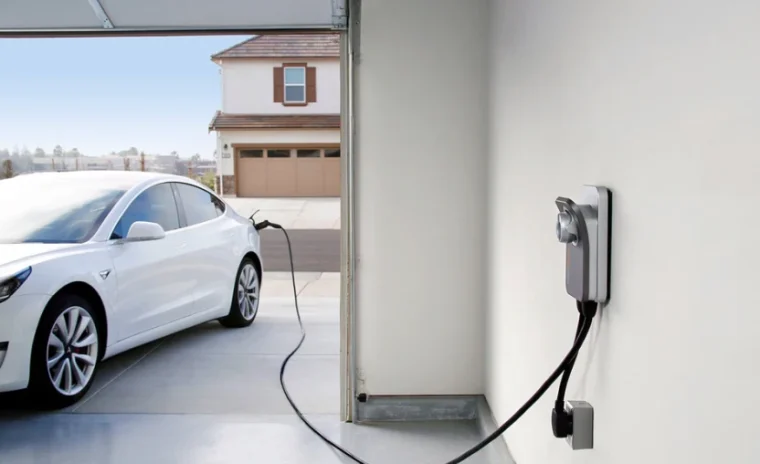
Location planning impacts everything from installation cost to daily charging convenience. The closer your charger is to your electrical panel, the less wiring is required, which reduces both material costs and installation time. However, the location must also align with where you typically park and provide adequate clearance for your vehicle and the charging cable.
For most homeowners in the Crofton and Fairwood communities, garage installations offer the most protection from Maryland’s weather extremes, ranging from humid summers to occasional winter ice storms. Indoor installations also protect the charger’s electronics and connections from moisture, extending the equipment’s lifespan. If your garage isn’t adjacent to your panel, outdoor installations are absolutely viable but require weatherproof enclosures and conduit rated for exterior exposure.
Consider cable management and trip hazards when selecting your mounting location. The charging cable should reach your vehicle’s charge port comfortably without stretching across walkways. Mounting height typically ranges from 48 to 60 inches, keeping the unit accessible while preventing interference with garage door operation or storage. 517 GMJ Electric helps Washington metro area homeowners evaluate these factors during the initial consultation, identifying the most practical and cost-effective placement for your specific property layout.
Why Skipping Permits Puts Your Home Sale and Insurance at Risk
EV charger installations in Prince George’s County require electrical permits and inspections to ensure compliance with the National Electrical Code (NEC) and local building codes. While this step might seem like bureaucratic red tape, permits protect your home value, maintain your insurance coverage, and verify that the installation meets safety standards designed to prevent electrical fires and equipment failures.
The permit process involves submitting installation plans to your local building department, scheduling inspections at specific milestones, and receiving final approval before the charger can be energized. Licensed electrical contractors handle this process routinely, understanding exactly what documentation inspectors require and how to schedule inspections efficiently to avoid delays.
Skipping permits creates serious long-term risks. Unpermitted electrical work can void your homeowner’s insurance if an electrical fire occurs, complicate future home sales when buyers request permit records, and result in costly fines when discovered during other inspections. Maryland jurisdictions actively enforce permitting requirements, and working with a licensed contractor like 517 GMJ Electric ensures your installation is documented, inspected, and fully compliant from day one.
When Your Service Upgrade Requires Pepco Coordination and How Long It Takes
In the Washington metro area, Pepco serves as the primary utility provider, and certain EV charger installations require coordination with them before work begins. If your home needs a service upgrade (increasing from 100 amps to 200 amps, for example), Pepco must be notified and may need to upgrade the meter or service connection from the street.
Time-of-use rate programs can significantly reduce your EV charging costs by offering lower electricity rates during off-peak hours, typically overnight when demand is lowest. Enrolling in these programs before your charger installation allows you to maximize savings from day one. Some utility programs also offer rebates or incentives for installing qualified Level 2 chargers, offsetting a portion of your installation cost.
Professional electrical contractors maintain working relationships with local utility representatives, understanding the notification requirements, service upgrade timelines, and rebate application processes. This coordination prevents surprise delays when utility work is required and ensures your installation schedule accounts for any utility-side tasks. 517 GMJ Electric routinely handles utility coordination for electrical panel upgrades and major installations throughout Anne Arundel County, Montgomery County, and Prince George’s County.
What DIY Installations Miss: Load Calculations, Grounding, and Warranty Protection
While some EV charger manufacturers market their products as DIY-friendly, the electrical work required for safe installation demands specialized knowledge, proper tools, and licensing. Working with 240-volt circuits carries serious shock and fire risks when performed incorrectly, and mistakes can damage your vehicle’s charging system, void equipment warranties, or create hidden hazards that manifest months or years later.
Licensed electricians bring crucial capabilities that DIY approaches cannot replicate. They perform accurate load calculations to prevent overloading, select appropriately sized wire and breakers based on voltage drop calculations and distance, install proper grounding and bonding to protect against faults, and ensure all connections meet torque specifications to prevent arcing. They also understand NEC requirements specific to EV chargers, including GFCI protection, disconnects, and emergency shutoff provisions.
The investment in professional installation typically ranges from reasonable to moderate depending on panel distance, required upgrades, and site conditions, but this cost delivers lasting value. You gain warranty protection (many manufacturers require professional installation), insurance compliance, code-approved work that passes inspection, and the confidence that your family and property are protected. With over 10 years serving the Bowie area, 517 GMJ Electric has completed numerous EV charger installations that meet the highest safety standards while minimizing disruption to homeowners’ daily routines.